
BPC-157
Price range: $35.00 through $50.00
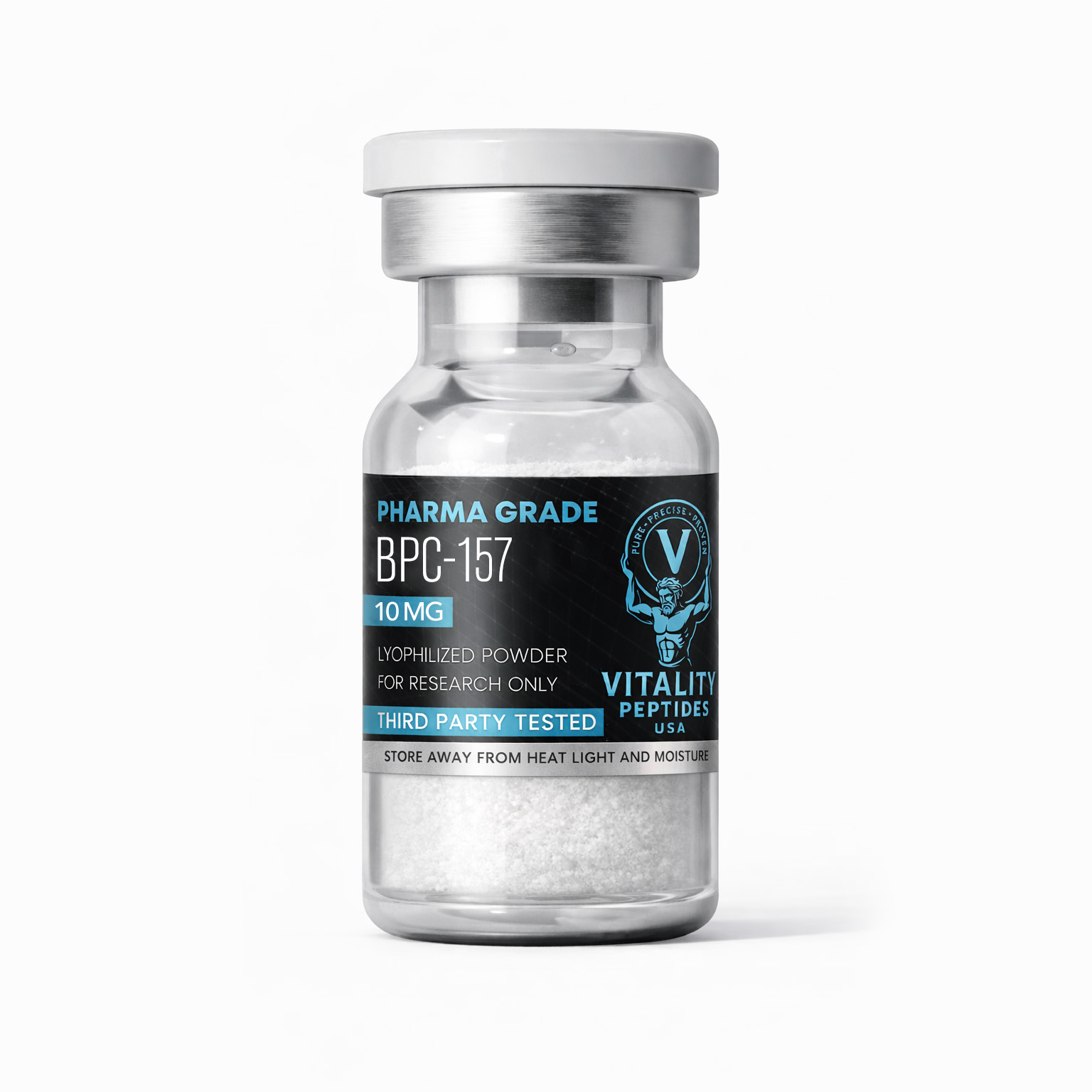
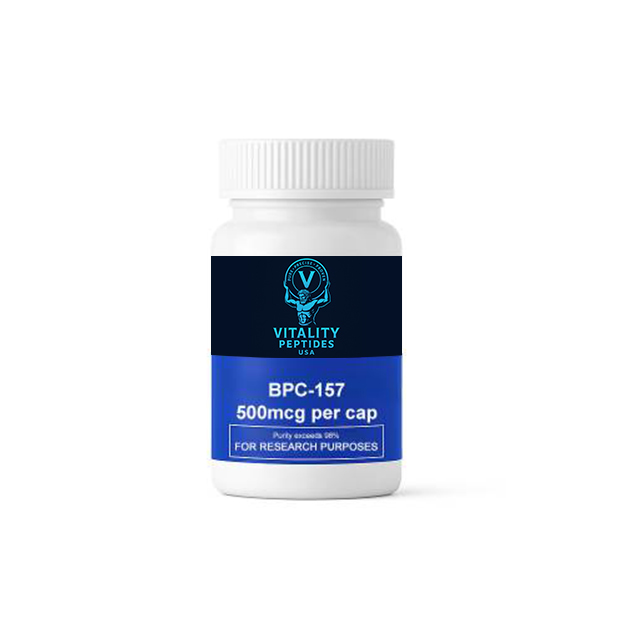
BPC-157 is a synthetic peptide derived from a naturally occurring gastric protein, studied for its potential role in supporting tissue health and integrity. Preclinical research investigates its effects on cellular pathways involved in inflammation, tissue repair, and recovery, especially in muscle, tendon, and ligament models. For research use only. Not for human consumption, medical, diagnostic, or therapeutic purposes.
Frequently Bought Together
Description
BPC-157 is a synthetic peptide derived from a protective protein sequence originally identified in gastric tissue. In laboratory research, it is widely studied for its potential role in cellular repair, tissue regeneration, and inflammatory signaling. Preclinical investigations focus on how BPC-157 interacts with biological pathways involved in muscle, tendon, ligament, gastrointestinal, and connective tissue models, making it one of the most extensively researched peptides in regenerative science.
Supplied as a high-purity lyophilized powder, BPC-157 is intended exclusively for laboratory research conducted by qualified professionals. It is not approved for human or veterinary use and should only be handled within controlled research environments.
Research Overview
BPC-157 has gained significant attention because of its broad range of preclinical research applications. Scientists continue to investigate its influence on tissue repair, angiogenesis, cellular communication, and inflammatory regulation across multiple experimental models.
Current research examines how the peptide interacts with growth factor signaling, extracellular matrix remodeling, and cellular migration. These mechanisms have made BPC-157 an important research tool for studying regenerative biology and recovery processes under controlled laboratory conditions.
Areas of Scientific Investigation
Laboratory studies continue to explore BPC-157 in several research fields, including:
- Cellular repair and regenerative biology
- Tendon and ligament research models
- Skeletal muscle recovery pathways
- Gastrointestinal tissue integrity studies
- Angiogenesis and vascular signaling
- Connective tissue remodeling
- Inflammatory pathway modulation
- Wound healing mechanisms
While many published findings are encouraging, the majority of available evidence comes from preclinical studies. Additional research is required to better understand its biological activity.
Mechanism of Action
Researchers believe BPC-157 may influence several interconnected biological pathways involved in tissue maintenance and recovery.
Tissue Repair Research
Preclinical investigations examine how BPC-157 supports cellular migration, fibroblast activity, and extracellular matrix remodeling. These processes are important components of tissue regeneration and connective tissue research.
Angiogenesis Studies
Scientific models suggest BPC-157 may influence angiogenic signaling involved in the formation of new blood vessels. Researchers continue studying its interaction with vascular growth factors and endothelial cell activity.
Inflammatory Pathway Research
BPC-157 is also investigated for its potential effects on inflammatory mediators. Laboratory studies evaluate how it may regulate cytokine expression and cellular signaling associated with inflammatory responses in various tissue models.
Gastrointestinal Research
Because BPC-157 originates from a gastric protein sequence, researchers frequently investigate its role in gastrointestinal tissue integrity and mucosal repair. Experimental studies explore protective mechanisms involving digestive tract tissues and epithelial barrier function.
Product Features
Our research-grade BPC-157 is manufactured to meet high laboratory standards, providing researchers with consistent quality and dependable analytical verification.
Key Features
- High-purity research peptide
- Lyophilized powder for laboratory applications
- Quality verified through analytical testing
- Suitable for in vitro and preclinical research
- Securely packaged for laboratory storage
- Manufactured for research consistency
Storage Guidelines
Proper storage is essential for maintaining peptide stability throughout research projects.
- Store lyophilized BPC-157 in a cool, dry environment according to laboratory protocols.
- After reconstitution, refrigerate under appropriate laboratory conditions.
- Avoid repeated freeze-thaw cycles.
- Handle using sterile laboratory techniques.
- Keep protected from excessive heat, moisture, and direct light.
Why Researchers Choose BPC-157
BPC-157 continues to be one of the most studied regenerative research peptides due to its diverse range of experimental applications. Scientists investigating tissue biology, musculoskeletal recovery, gastrointestinal function, and inflammatory signaling frequently include BPC-157 in laboratory research because of its broad preclinical data and well-documented biological pathways.
Whether studying connective tissue repair, vascular biology, or cellular recovery mechanisms, BPC-157 remains a valuable research compound for expanding scientific understanding of regenerative processes.
Research Use Only
This product is supplied strictly for laboratory research purposes only.
It is not intended for human consumption, veterinary use, diagnostic procedures, or therapeutic applications. This product has not been evaluated by the U.S. Food and Drug Administration (FDA) and is not intended to diagnose, treat, cure, or prevent any disease.
Frequently Asked Questions
What is BPC-157?
BPC-157 is a synthetic peptide derived from a naturally occurring protein sequence found in gastric tissue. In laboratory research, it is studied for its potential role in tissue repair, cellular regeneration, inflammatory signaling, and gastrointestinal biology. It is supplied exclusively for research purposes.
How should BPC-157 be stored?
Store the lyophilized peptide in a cool, dry environment according to laboratory guidelines. Once reconstituted, it should be refrigerated and protected from repeated freeze-thaw cycles to help maintain stability throughout research.
What form is BPC-157 supplied in?
BPC-157 is typically supplied as a high-purity lyophilized powder, allowing researchers to prepare solutions according to their experimental protocols.
What makes BPC-157 popular in regenerative research?
BPC-157 has been extensively studied because of its potential interactions with pathways involved in cellular repair, angiogenesis, connective tissue biology, and inflammatory regulation. Its broad range of preclinical research applications has made it a commonly investigated peptide in regenerative science.
Does BPC-157 have published research?
Yes. Numerous preclinical studies have explored BPC-157 across various laboratory models, including musculoskeletal, gastrointestinal, vascular, and connective tissue research. However, robust clinical evidence in humans remains limited.
Is BPC-157 the same as TB-500?
No. Although both peptides are frequently investigated in regenerative research, they differ in structure and biological targets. BPC-157 is commonly studied for cytoprotective and tissue repair pathways, while TB-500 is primarily researched for actin regulation, cellular migration, and wound healing mechanisms.
Can BPC-157 be combined with other research peptides?
In laboratory settings, researchers sometimes investigate BPC-157 alongside compounds such as TB-500 or GHK-Cu to study complementary biological pathways. These combinations are intended solely for experimental research and should not be interpreted as therapeutic applications.
Is this product intended for human consumption?
No. This product is for research use only. It is not intended for human consumption, veterinary use, medical treatment, diagnosis, or disease prevention. It should only be handled by qualified professionals in controlled laboratory environments.
Related products
-

BPC-157/TB-500 Mix Research Peptide
Price range: $75.00 through $100.00 Select options This product has multiple variants. The options may be chosen on the product page -
RETA
Price range: $85.00 through $1,250.00 Select options This product has multiple variants. The options may be chosen on the product page -

TB-500 Peptide
$95.00 Select options This product has multiple variants. The options may be chosen on the product page -

Glutathione
$120.00 Select options This product has multiple variants. The options may be chosen on the product page