Frequently Asked Questions
What products are available at Vitality Research?
Vitality Research offers a selection of research peptides, peptide blends, and laboratory research compounds covering several areas of peptide and molecular biology research.
What are research peptides?
Research peptides are short chains of amino acids studied in laboratory settings to investigate biological activity, cellular communication, receptor interactions, and molecular signaling pathways.
What types of research peptides can I find in the Vitality Research shop?
The shop features individual research compounds and peptide blends, including products associated with cellular health, metabolic research, growth-factor research, recovery research, and pigmentation-response research.
What are peptide blends?
Peptide blends combine two or more compounds in one formulation. In laboratory research, they may be used to investigate the individual components and their potential interactions under controlled experimental conditions.
What research categories does Vitality Research offer?
Vitality Research organizes products into research-focused categories, helping visitors explore compounds associated with cellular health, metabolism, growth-factor pathways, recovery biology, and other areas of scientific investigation.
What is the difference between an individual peptide and a peptide blend?
An individual peptide contains one primary peptide compound, while a blend contains multiple compounds. Researchers should review each product's composition and specifications before selecting material for a study.
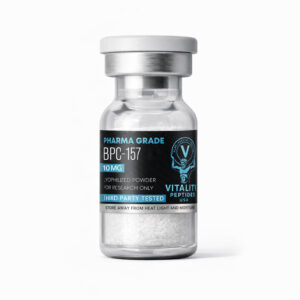
What is BPC-157 studied for?
BPC-157 is an experimental peptide investigated in preclinical research involving cellular signaling and tissue biology. Evidence from laboratory models should not be interpreted as proof of safety or effectiveness in humans.
What is GHK-Cu?
GHK-Cu is a copper-binding tripeptide studied for its interactions with cellular signaling and extracellular-matrix-related processes. Its research findings do not establish that every formulation or route of administration is safe or effective.
What is NAD+ and why is it researched?
NAD+ is a coenzyme involved in cellular redox reactions and energy metabolism. Researchers investigate its role in biochemical pathways and cellular function.
What are metabolic research peptides?
Metabolic research peptides are compounds investigated for their interactions with pathways related to endocrine signaling, glucose regulation, energy balance, and metabolism. Findings depend on the compound and the research model.
How can I evaluate the quality of a research peptide?
Review available product specifications, batch-specific analytical documentation, identity and purity results, and the supplier's quality-control information. A Certificate of Analysis should correspond to the relevant product batch.
What is a Certificate of Analysis (COA)?
A Certificate of Analysis is a document reporting analytical results for a particular batch. Depending on the testing performed, it may include compound identity, purity, batch details, and other quality measurements.
How should research compounds be stored?
Storage requirements vary by compound and formulation. Follow the product-specific documentation and manufacturer instructions for temperature, light exposure, moisture protection, and handling.
Are Vitality Research products approved for human use?
No. Vitality Research states that its products are intended strictly for laboratory research and are not for human or animal use, diagnosis, treatment, cure, or disease prevention.
How can I choose the right product from the Vitality Research shop?
Start by identifying the biological pathway or research question being investigated. Then compare each product's documented composition, specifications, quality-testing information, and intended research category before making a selection.