
Glutathione
$120.00
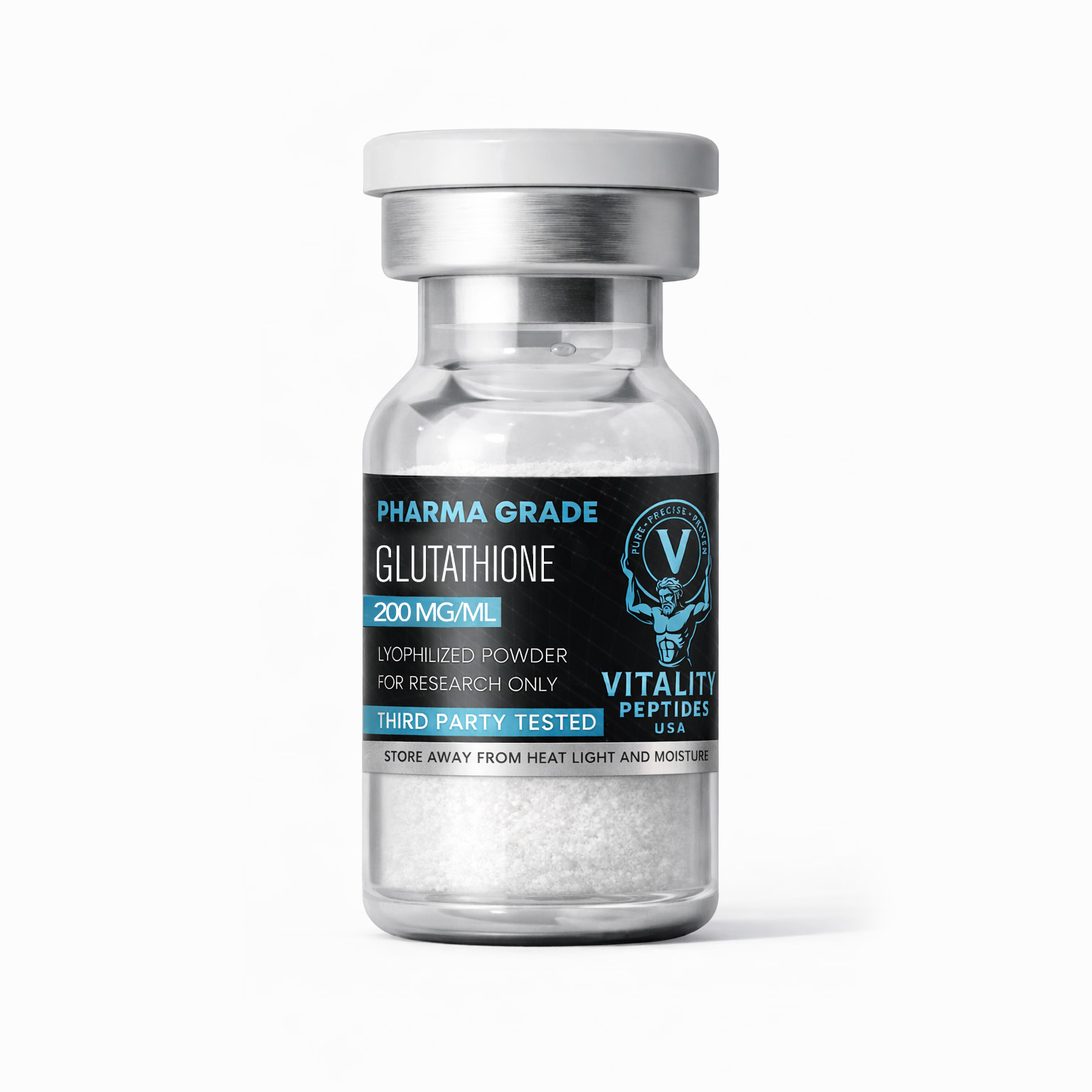
Glutathione is a naturally occurring tripeptide made up of glutamine, cysteine, and glycine, widely researched for its function as a key intracellular antioxidant. In laboratory and preclinical studies, it is examined for its involvement in cellular defense systems, redox balance, detoxification pathways, and immune signaling mechanisms. Research has also evaluated its role in models of oxidative stress and skin-related cellular processes.
For in-vitro laboratory research only. Not a drug, food, cosmetic, or veterinary product. Not for human or animal administration.
Frequently Bought Together
Description
Glutathione
Glutathione is a naturally occurring tripeptide composed of glutamine, cysteine, and glycine. It is widely studied in laboratory research because of its role in intracellular antioxidant activity, redox balance, cellular defense, and oxidative stress pathways.
Unlike many single-target research compounds, glutathione is a naturally occurring molecule involved in several interconnected cellular processes. This makes it particularly relevant for researchers examining how cells maintain redox homeostasis and respond to oxidative conditions.
What Is Glutathione?
Glutathione is a three-amino-acid peptide found naturally within cells. Its composition of glutamine, cysteine, and glycine gives researchers a defined molecular system for investigating antioxidant and redox-related cellular processes.
Research involving glutathione commonly focuses on its relationship with:
- Intracellular antioxidant activity
- Redox balance
- Cellular defense mechanisms
- Oxidative stress pathways
- Detoxification-related cellular processes
- Immune signaling
- Skin-related cellular research
Because glutathione participates in fundamental cellular pathways, it can be incorporated into laboratory studies examining how cells respond to oxidative and environmental stressors.
Glutathione Research Applications
Glutathione research covers a broad range of laboratory investigations rather than a single biological pathway. Researchers may examine glutathione concentrations, redox status, antioxidant activity, and its interaction with other cellular systems.
Its role in maintaining cellular redox balance makes it useful for research models focused on oxidative conditions and cellular defense. Researchers can also investigate how glutathione-related pathways change under different experimental conditions.
The versatility of this naturally occurring tripeptide makes it relevant across biochemical, cellular, and molecular research.
Glutathione Detox Research
Glutathione detox is commonly used when discussing research into glutathione’s involvement in cellular detoxification processes. In laboratory settings, this refers to investigating biochemical mechanisms through which cells process and respond to certain compounds and oxidative byproducts.
Glutathione-related detoxification research can therefore help researchers explore cellular defense mechanisms and the relationship between redox balance and detoxification pathways.
This terminology should not be interpreted as a consumer detoxification or therapeutic claim. The product is supplied strictly as a research compound.
Glutathione and Skin Research
Glutathione has also attracted scientific interest in skin brightening and other skin-related cellular research. Studies may examine its relationship with oxidative balance and cellular pathways associated with pigmentation and skin biology.
For laboratory researchers, glutathione provides a defined compound for investigating biochemical processes relevant to skin-cell models and related research systems.
Choosing a Glutathione Supplier
When selecting a Glutathione supplier, researchers should look beyond the product name and consider the quality information provided with the material. Clear product identification, appropriate packaging, batch information, and supporting documentation are important when selecting compounds for laboratory work.
A research-focused supplier should also clearly distinguish laboratory materials from supplements, cosmetics, and products intended for personal consumption.
Glutathione Buy Online
Researchers looking to Glutathione buy online should evaluate the product based on its intended research application and the documentation available from the supplier. Transparent product information makes it easier to determine whether a compound is appropriate for a particular laboratory workflow.
Glutathione should be selected as a research material based on its stated specifications rather than consumer-oriented descriptions or unsupported biological claims.
Frequently Asked Questions
What is glutathione?
Glutathione is a naturally occurring tripeptide made from glutamine, cysteine, and glycine. It is extensively studied for its role in antioxidant activity, redox balance, and cellular defense.
What areas does glutathione research cover?
Research may examine oxidative stress, intracellular redox balance, cellular defense, detoxification-related pathways, immune signaling, and skin-related cellular processes.
Is glutathione a peptide?
Yes. Glutathione is a small tripeptide consisting of three amino acids: glutamine, cysteine, and glycine.
Is this glutathione intended for supplementation?
No. This product is supplied for laboratory research purposes and is not intended as a dietary supplement, cosmetic, medication, or consumer product.
What should I consider when choosing a glutathione supplier?
Researchers should consider product identification, available quality documentation, batch information, packaging, and whether the supplier clearly states the material’s intended research use.
Research Use Only
This product is intended solely for research and laboratory use. It is not intended for human or veterinary consumption, self-administration, supplementation, cosmetic use, diagnosis, treatment, cure, or prevention of any disease or medical condition.
Related products
-

TB-500 Peptide
$95.00 Select options This product has multiple variants. The options may be chosen on the product page -
Glow Pro Blend Research Peptide
$95.00 Select options This product has multiple variants. The options may be chosen on the product page -

BPC-157/TB-500 Mix Research Peptide
Price range: $75.00 through $100.00 Select options This product has multiple variants. The options may be chosen on the product page -
KLOW Peptide Blend
$125.00 Select options This product has multiple variants. The options may be chosen on the product page