Cartalax Peptide
$70.00
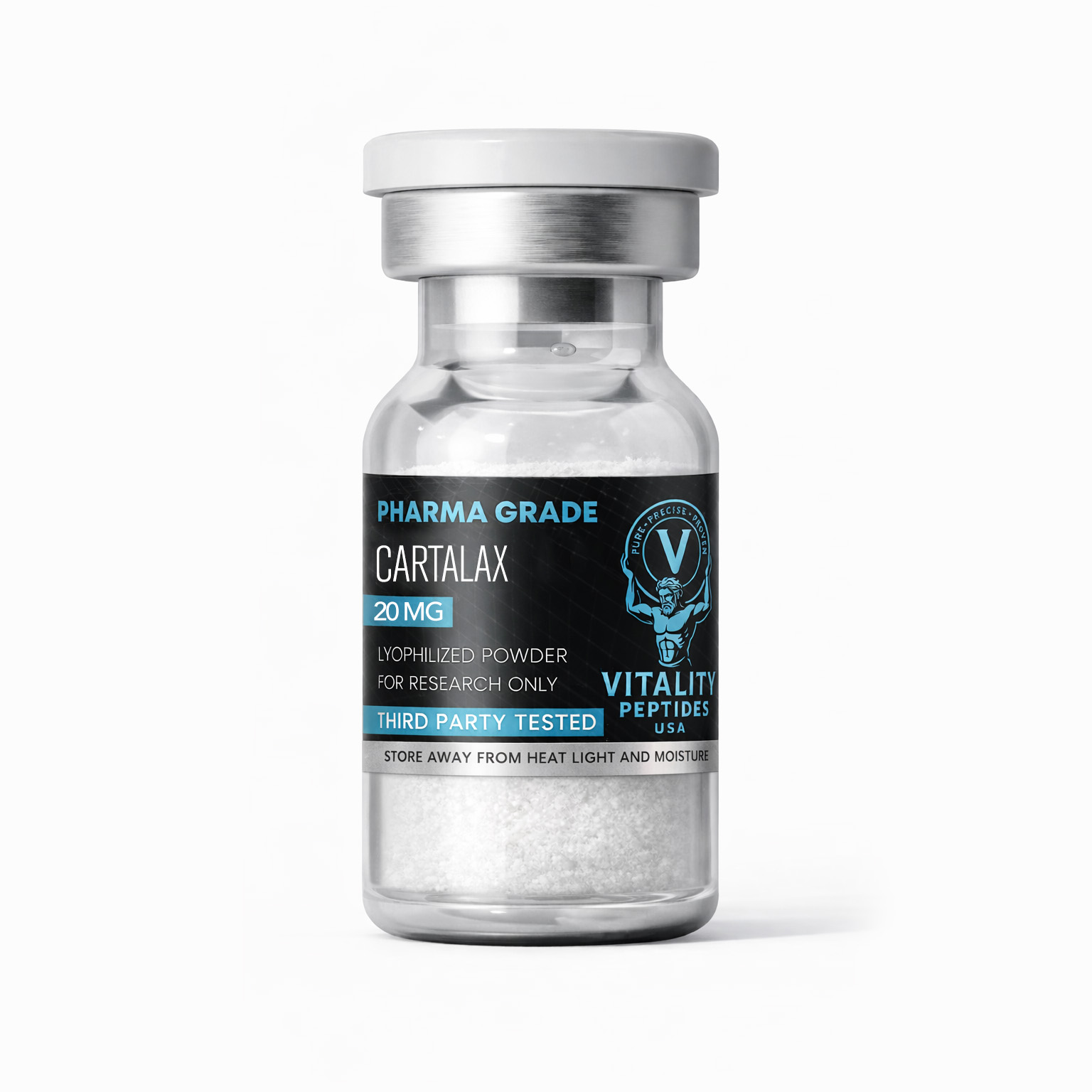
Cartalax is a specialized Khavinson bioregulatory peptide designed to support joint function, cartilage health, and connective tissue vitality. In laboratory research, it is used to investigate cartilage cell activity, cellular repair pathways, and musculoskeletal resilience mechanisms, offering a precise tool for studying tissue integrity, cellular regulation, and age-associated musculoskeletal changes.
For research use only. Not for human or animal consumption. Certificates of authenticity available upon request.
Frequently Bought Together
Description
Cartalax is a Khavinson bioregulatory peptide widely studied in laboratory research for its potential role in cartilage biology, connective tissue regulation, and musculoskeletal physiology. As a tissue-specific research peptide, Cartalax has attracted scientific interest for its involvement in cellular communication, extracellular matrix organization, and biological pathways that help maintain cartilage structure and connective tissue integrity. Ongoing preclinical investigations continue to explore its interactions with cartilage cells and age-associated musculoskeletal changes, making it a valuable tool for researchers studying tissue homeostasis and peptide-mediated cellular regulation. Cartalax is supplied exclusively for laboratory and preclinical research and is not intended for human or veterinary use.
Research-Grade Cartalax Peptide
Cartalax is a short synthetic peptide belonging to the family of Khavinson bioregulatory peptides, a class of peptides investigated for their tissue-specific biological activity. Unlike peptides that produce broad systemic effects, Cartalax is primarily researched for its potential interactions with cartilage and connective tissue cells, allowing scientists to examine cellular regulation within these specialized tissues.
Manufactured as a research-grade lyophilized peptide, Cartalax is designed to provide consistency, stability, and reproducibility for laboratory investigations. Researchers use this peptide to study mechanisms involved in extracellular matrix maintenance, cartilage cell biology, and musculoskeletal tissue function. Its specialized research profile has made it an important compound for laboratories investigating connective tissue physiology, peptide signaling pathways, and regenerative biology.
What is Cartalax?
Cartalax is a synthetic peptide developed for scientific research involving cartilage tissue and connective tissue biology. It belongs to the growing family of Khavinson bioregulators, which are studied for their potential to influence cellular activity through naturally occurring biological pathways.
Khavinson Bioregulatory Peptides
Khavinson peptides are short amino acid sequences that have been investigated for their tissue-specific regulatory properties. Rather than acting as conventional therapeutic compounds, these peptides are studied for their interactions with cellular communication networks, gene expression, and tissue maintenance mechanisms.
Cartalax is specifically associated with cartilage and connective tissue research, making it particularly relevant for investigations involving musculoskeletal biology and structural tissue organization.
Mechanism of Research Interest
Current laboratory studies investigate how Cartalax may participate in cellular signaling pathways associated with cartilage maintenance and connective tissue regulation. Researchers continue exploring its potential influence on chondrocyte activity, extracellular matrix organization, and normal tissue homeostasis.
Because of its tissue-specific profile, Cartalax serves as a useful experimental peptide for understanding biological processes involved in cartilage physiology and connective tissue integrity under controlled laboratory conditions.
Research Applications
Cartalax is widely utilized in laboratory and preclinical investigations focused on musculoskeletal biology and connective tissue physiology. Researchers continue to examine its biological activity across several areas of tissue-specific cellular research.
Cartilage Biology Research
One of the primary areas of investigation involves cartilage biology. Researchers study Cartalax to better understand the cellular mechanisms responsible for cartilage maintenance, extracellular matrix organization, and the biological activity of chondrocytes within connective tissues.
Connective Tissue Studies
Cartalax is also investigated in studies involving connective tissue physiology. Laboratory research explores how peptide-mediated cellular signaling may contribute to tissue organization, structural integrity, and extracellular matrix regulation.
Musculoskeletal Research
Experimental models utilize Cartalax to investigate musculoskeletal tissues and the complex biological pathways involved in tissue remodeling, cellular communication, and structural maintenance. These studies contribute to a broader understanding of connective tissue biology and peptide-based cellular regulation.
Healthy Aging Research
Preclinical investigations continue to explore Cartalax within models of healthy aging, examining biological processes associated with age-related changes in connective tissues, cartilage structure, and cellular homeostasis. These studies aim to improve scientific understanding of tissue-specific regulation during normal biological aging.
Quality & Storage
Maintaining peptide integrity is essential for achieving consistent laboratory results. Cartalax is manufactured according to research-grade quality standards and supplied as a lyophilized powder to help preserve stability throughout transportation and storage.
Research-Grade Manufacturing
Each production batch is prepared using controlled manufacturing processes designed to support purity, consistency, and reproducibility for laboratory research. The lyophilized formulation helps maintain peptide integrity before reconstitution while supporting long-term storage under appropriate laboratory conditions.
Research Background
Scientific interest in Cartalax has expanded alongside growing research into Khavinson bioregulatory peptides and their tissue-specific biological properties. Experimental studies continue to investigate how these peptides interact with cellular signaling pathways involved in cartilage maintenance, connective tissue organization, and extracellular matrix biology.
Current research focuses on understanding the molecular mechanisms that regulate cartilage cells, connective tissue integrity, and musculoskeletal physiology. Investigators are also exploring how tissue-specific peptides may contribute to normal cellular communication and biological homeostasis within connective tissues.
Although research remains ongoing, Cartalax has become an important laboratory tool for scientists studying cartilage biology, peptide-mediated cellular regulation, and musculoskeletal tissue function.
Why Researchers Choose Cartalax
Researchers frequently select Cartalax because of its specialized focus on cartilage and connective tissue biology.
Common Research Areas:
Cartalax is commonly utilized in investigations involving:
- Cartilage biology
- Chondrocyte function
- Connective tissue physiology
- Extracellular matrix organization
- Cellular signaling pathways
- Tissue remodeling mechanisms
- Musculoskeletal biology
- Bioregulatory peptide research
- Healthy aging studies
- Comparative Khavinson peptide research
Its tissue-specific research profile makes Cartalax a valuable addition to laboratories investigating connective tissue regulation and peptide-based cellular biology.
Research Use Only
Cartalax is supplied exclusively for qualified laboratory researchers, universities, and scientific institutions conducting laboratory and preclinical investigations.
Not Intended For
This product is not intended for:
- Human consumption
- Veterinary use
- Clinical treatment
- Diagnostic procedures
- Dietary supplements
- Cosmetic applications
Disclaimer
For Research Use Only (RUO).
Cartalax is supplied exclusively for laboratory and preclinical research. This product has not been approved by the U.S. Food and Drug Administration (FDA) for therapeutic or diagnostic use and is not intended to diagnose, treat, cure, or prevent any disease. It should only be handled by qualified professionals operating within controlled laboratory environments.
Frequently Asked Questions
What is Cartalax?
Cartalax is a synthetic Khavinson bioregulatory peptide used in laboratory research to investigate cartilage biology, connective tissue regulation, extracellular matrix organization, and tissue-specific cellular signaling.
What is Cartalax commonly researched for?
Researchers study Cartalax in laboratory models involving cartilage maintenance, chondrocyte biology, connective tissue physiology, musculoskeletal function, extracellular matrix regulation, tissue remodeling, and healthy aging research.
How should Cartalax be stored?
Store Cartalax refrigerated or frozen according to laboratory protocols. Keep the lyophilized peptide protected from heat, moisture, and direct light. After reconstitution, follow established laboratory handling procedures and avoid repeated freeze-thaw cycles whenever possible.
What makes Cartalax different from other Khavinson bioregulatory peptides?
Cartalax is primarily investigated for its tissue-specific association with cartilage and connective tissue biology. Researchers often compare Cartalax with other Khavinson peptides to evaluate differences in tissue targeting, cellular signaling, and biological regulatory mechanisms.
Is Cartalax intended for human use?
No. Cartalax is supplied strictly for Research Use Only (RUO). It is intended exclusively for laboratory and preclinical investigations and is not approved for human or veterinary use.