Frequently Asked Questions
What are recovery research peptides?
Recovery research peptides are compounds investigated in laboratory and preclinical studies involving cellular signaling, tissue biology, inflammatory pathways, and biological responses to stress. Their research applications vary by compound, and experimental findings do not establish clinical benefits.
What products are available in Vitality Research’s Recovery Research category?
The category includes BPC-157, TB-500, BPC-157/TB-500 Mix, Glow Pro Blend, BPC-157/KPV, KLOW Peptide Blend, glutathione, BPC-157 Spray, and other listed compounds. Product availability may change, so consult the current category page for the latest selection.
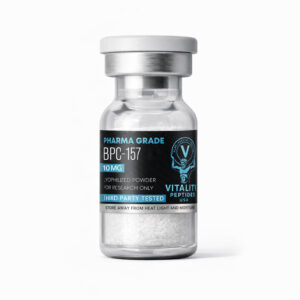
What is BPC-157?
BPC-157 is a synthetic 15-amino-acid peptide studied primarily in preclinical research involving cellular signaling, gastrointestinal biology, connective tissue, and other biological pathways. Its safety and effectiveness in humans have not been established.
What is TB-500?
TB-500 is a name associated with a synthetic peptide related to thymosin beta-4 research. It is investigated in laboratory studies involving actin-related pathways, cellular migration, and cytoskeletal organization. The exact molecular identity should be verified for each research product.
What is the difference between BPC-157 and TB-500?
BPC-157 and TB-500 have different molecular structures and research histories. BPC-157 is studied across several preclinical biological models, while TB-500-related research often focuses on actin regulation and cellular movement.
What is a BPC-157/TB-500 peptide blend?
A BPC-157/TB-500 blend combines the two compounds in one research formulation. Researchers may investigate their separate and combined biological pathways, but the combination should not be assumed to have proven synergy or greater effectiveness than either compound alone.
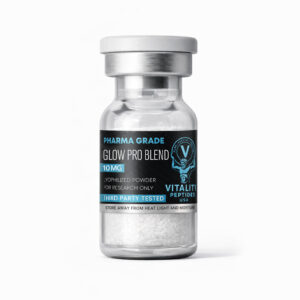
What is Glow Pro Blend?
Vitality Research describes Glow Pro Blend as a research formulation containing GHK-Cu, TB-500, and BPC-157. It can be discussed in the context of research into cellular signaling, extracellular matrix biology, and tissue-related pathways, without implying established cosmetic or therapeutic benefits.
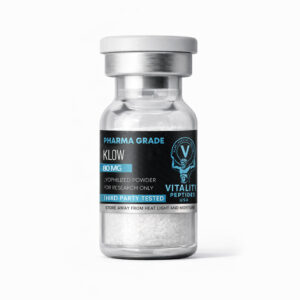
What is the KLOW peptide blend?
KLOW is a multi-peptide research formulation. Researchers should consult the current product label to verify its exact ingredients and quantities before comparing it with other peptide blends or interpreting research findings.
What is BPC-157/KPV?
BPC-157/KPV is a combination of two peptides studied separately in preclinical research involving different biological pathways. The exact composition should be confirmed from the product listing, and evidence about either peptide individually does not establish the safety or effectiveness of the combination.
What role does glutathione play in cellular research?
Glutathione is a naturally occurring tripeptide involved in antioxidant defense, cellular redox balance, and enzyme-dependent reactions. It is distinct from synthetic research peptides such as BPC-157 and TB-500.
What research areas are associated with recovery-related compounds?
Depending on the compound, research areas may include cellular signaling, actin dynamics, extracellular matrix biology, oxidative stress, inflammatory signaling, and tissue remodeling. These are scientific areas of investigation, not guarantees of recovery or treatment outcomes.
What does preclinical research mean?
Preclinical research includes laboratory experiments and animal studies used to investigate biological mechanisms before or alongside clinical evaluation. Findings from these models cannot independently establish human safety, efficacy, appropriate dosing, or long-term outcomes.
How should researchers evaluate the quality of a research peptide?
Researchers should review the compound’s identity, stated purity, batch or lot information, and available analytical documentation. Claims about third-party testing should be supported by current, batch-specific records.
Are Vitality Research products approved for human use?
Vitality Research states that its products are intended strictly for laboratory research and are not intended for human or animal use, diagnosis, or treatment. A compound’s research availability does not mean it is an approved medicine.
How can researchers choose a product from the Recovery Research category?
Researchers should begin with the scientific question they want to investigate, then compare each compound’s verified identity, formulation, available analytical documentation, and relevant literature. They should avoid selecting products based on unsubstantiated claims about healing, injury recovery, or performance enhancement.