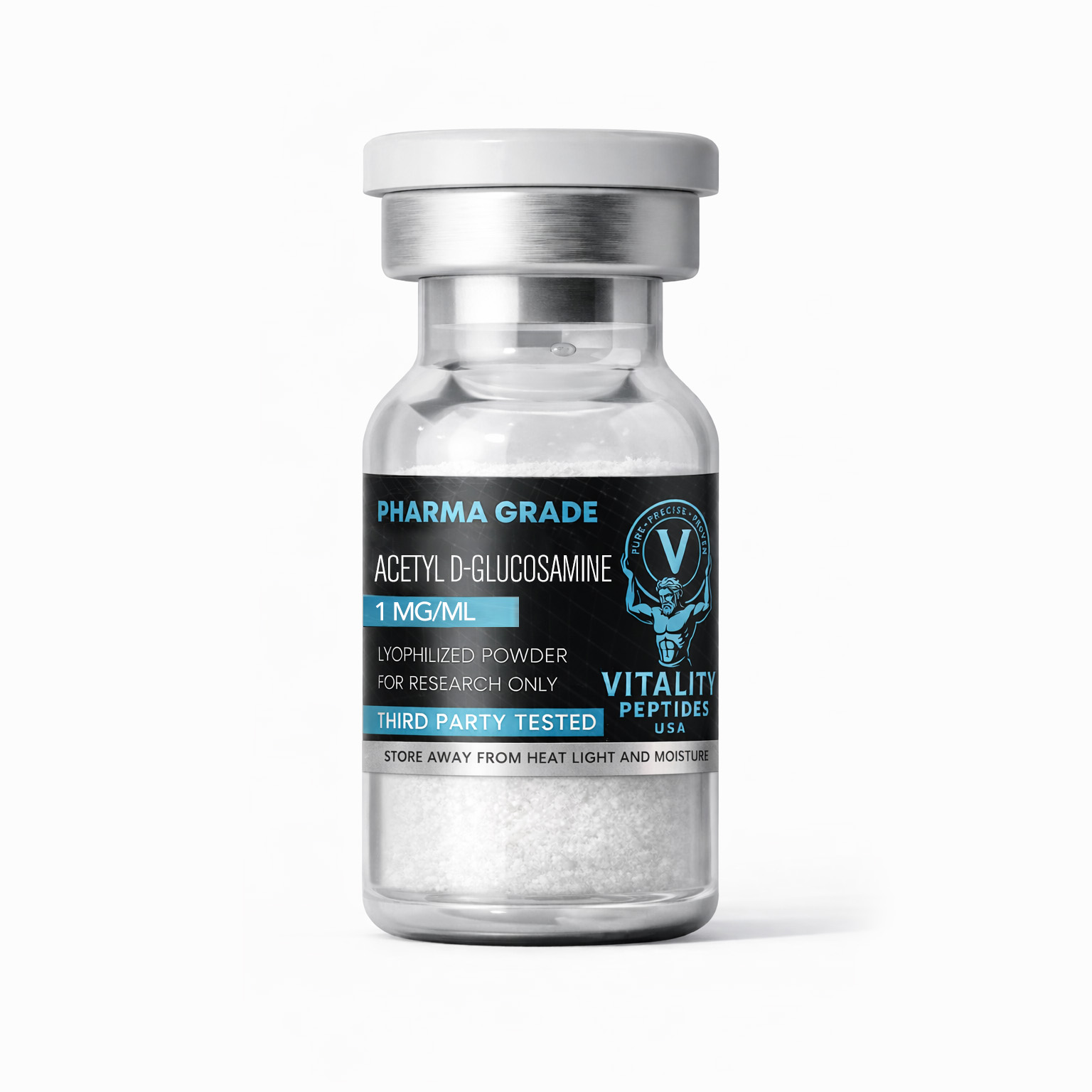
Acetyl D-Glucosamine
$55.00
Acetyl D‑Glucosamine is an amino sugar derived from glucose via the acetylation of glucosamine. It functions as a key precursor in the biosynthesis of glycosaminoglycans and proteoglycans, which are critical structural components of connective tissue matrices. In laboratory research, Acetyl D‑Glucosamine is commonly used to study cellular signaling, tissue architecture, and glycosylation processes, as well as to investigate matrix metalloproteinase regulation and extracellular matrix maintenance in vitro.
For in‑vitro laboratory research only. Not a drug, food, cosmetic, or veterinary product. Not for human or animal administration.
Frequently Bought Together
Description
Acetyl D-Glucosamine is a naturally derived amino sugar produced through the acetylation of glucosamine. It serves as an important biochemical precursor in the synthesis of glycosaminoglycans (GAGs) and proteoglycans, two essential structural components of the extracellular matrix and connective tissues. Because of its central role in cellular architecture and glycosylation, Acetyl D-Glucosamine has become an important research compound across multiple areas of molecular and cellular biology.
In laboratory settings, researchers investigate Acetyl D-Glucosamine for its involvement in extracellular matrix maintenance, cellular signaling, glycosylation pathways, and matrix metalloproteinase (MMP) regulation. Its broad biological relevance makes it a valuable tool for studies involving connective tissue biology, cartilage research, and age-related cellular processes.
Manufactured to rigorous research standards, Acetyl D-Glucosamine is intended exclusively for laboratory and in vitro research conducted by qualified professionals.
For laboratory research use only. Not intended for human or veterinary consumption.
What Is Acetyl D-Glucosamine?
Acetyl D-Glucosamine (GlcNAc) is an acetylated derivative of glucosamine that naturally participates in numerous biological processes. It functions as a key building block in the production of glycosaminoglycans and proteoglycans, molecules that contribute to the structure and function of connective tissues throughout the body.
Researchers continue to study Acetyl D-Glucosamine because of its involvement in glycosylation, extracellular matrix organization, and intracellular signaling pathways. These biological functions have established it as an important research compound for investigating tissue integrity, cellular communication, and molecular regulation.
Areas of Scientific Research
Acetyl D-Glucosamine has been investigated in laboratory and preclinical research involving connective tissue biology and cellular regulation. Current areas of study include:
- Glycosaminoglycan biosynthesis
- Proteoglycan formation
- Extracellular matrix maintenance
- Cellular signaling pathways
- Glycosylation research
- Matrix metalloproteinase (MMP) regulation
- Connective tissue biology
- Cartilage and tissue architecture research
Although scientific understanding continues to evolve, Acetyl D-Glucosamine is supplied exclusively for laboratory investigation.
Mechanism of Research Interest
Researchers study Acetyl D-Glucosamine for its contribution to the molecular pathways responsible for extracellular matrix organization and glycoprotein synthesis. Laboratory investigations continue to explore how this amino sugar participates in cellular communication, structural maintenance, and tissue-specific biological processes.
Current research examines its role in:
- Glycosylation pathways
- Extracellular matrix organization
- Cellular signaling mechanisms
- Proteoglycan biosynthesis
- Matrix metalloproteinase regulation
- Connective tissue maintenance
These investigations contribute to a greater understanding of cellular architecture, tissue biology, and molecular regulation.
Acetyl D-Glucosamine in Connective Tissue Research
Acetyl D-Glucosamine has attracted significant scientific interest because of its importance in extracellular matrix biology. Researchers frequently investigate its role in maintaining connective tissue structure and supporting the molecular pathways involved in tissue organization and cellular communication.
Its biological significance continues to make Acetyl D-Glucosamine an important research compound for studies involving cartilage biology, extracellular matrix regulation, and age-associated tissue research.
Product Specifications
| Specification | Details |
| Product Name | Acetyl D-Glucosamine |
| Compound Type | Acetylated Amino Sugar |
| Primary Research Area | Glycosylation & Connective Tissue Biology |
| Research Applications | Cellular Signaling, Extracellular Matrix, Proteoglycan Research |
| Form | Research-Grade Compound |
| Intended Use | Laboratory Research Only |
| Storage | Store according to laboratory protocol |
Quality Standards
Our Acetyl D-Glucosamine is manufactured to support professional laboratory research where purity, consistency, and reliability are essential. Every production batch undergoes strict quality-control procedures to provide dependable material for scientific investigations.
Key quality features include:
- Research-grade quality
- High-purity manufacturing standards
- Reliable batch consistency
- Secure packaging for product protection
- Suitable for universities, biotechnology companies, and professional research laboratories
Researchers can rely on consistent product quality for controlled laboratory studies.
Storage Instructions
Proper storage helps preserve product integrity throughout laboratory research.
For optimal handling:
- Store according to your laboratory’s recommended storage protocol.
- Protect from excessive heat, moisture, and direct light.
- Keep the container tightly sealed when not in use.
- Follow established laboratory handling procedures.
Always handle research materials using appropriate laboratory equipment and safety protocols.
Why Researchers Choose Acetyl D-Glucosamine
Acetyl D-Glucosamine is widely studied because of its role in extracellular matrix biology and cellular regulation. Its involvement in glycosylation and connective tissue research makes it a valuable compound across multiple scientific disciplines.
Researchers choose Acetyl D-Glucosamine because it offers:
- A key precursor for glycosaminoglycan and proteoglycan biosynthesis.
- Applications in glycosylation, extracellular matrix, and connective tissue research.
- A valuable model for investigating matrix metalloproteinase regulation and cellular signaling.
- Research potential in cartilage biology and tissue architecture studies.
- Research-grade quality suitable for universities, biotechnology companies, and professional laboratories.
Its growing scientific relevance continues to support investigations into connective tissue biology, molecular regulation, and extracellular matrix maintenance.
Frequently Asked Questions
What is Acetyl D-Glucosamine used for in research?
Acetyl D-Glucosamine is commonly studied in laboratory research involving glycosylation, extracellular matrix biology, proteoglycan synthesis, connective tissue research, and cellular signaling.
What type of compound is Acetyl D-Glucosamine?
Acetyl D-Glucosamine is an acetylated amino sugar that serves as a biochemical precursor for glycosaminoglycans and proteoglycans involved in connective tissue structure.
What areas of research commonly use Acetyl D-Glucosamine?
Researchers investigate Acetyl D-Glucosamine in studies involving extracellular matrix maintenance, cartilage biology, glycosylation pathways, connective tissue organization, and matrix metalloproteinase regulation.
How should Acetyl D-Glucosamine be stored?
Store the product according to your laboratory’s recommended storage procedures while protecting it from excessive heat, moisture, and direct light.
Is this product intended for human use?
No. This product is supplied exclusively for laboratory research purposes and is not intended for human or veterinary consumption.
Research Use Disclaimer
This product is supplied exclusively for laboratory research, analytical testing, and scientific investigation. It is not intended for human consumption, veterinary use, therapeutic applications, or diagnostic procedures. By purchasing this product, researchers acknowledge responsibility for handling and using the compound in accordance with applicable laboratory regulations and safety guidelines.