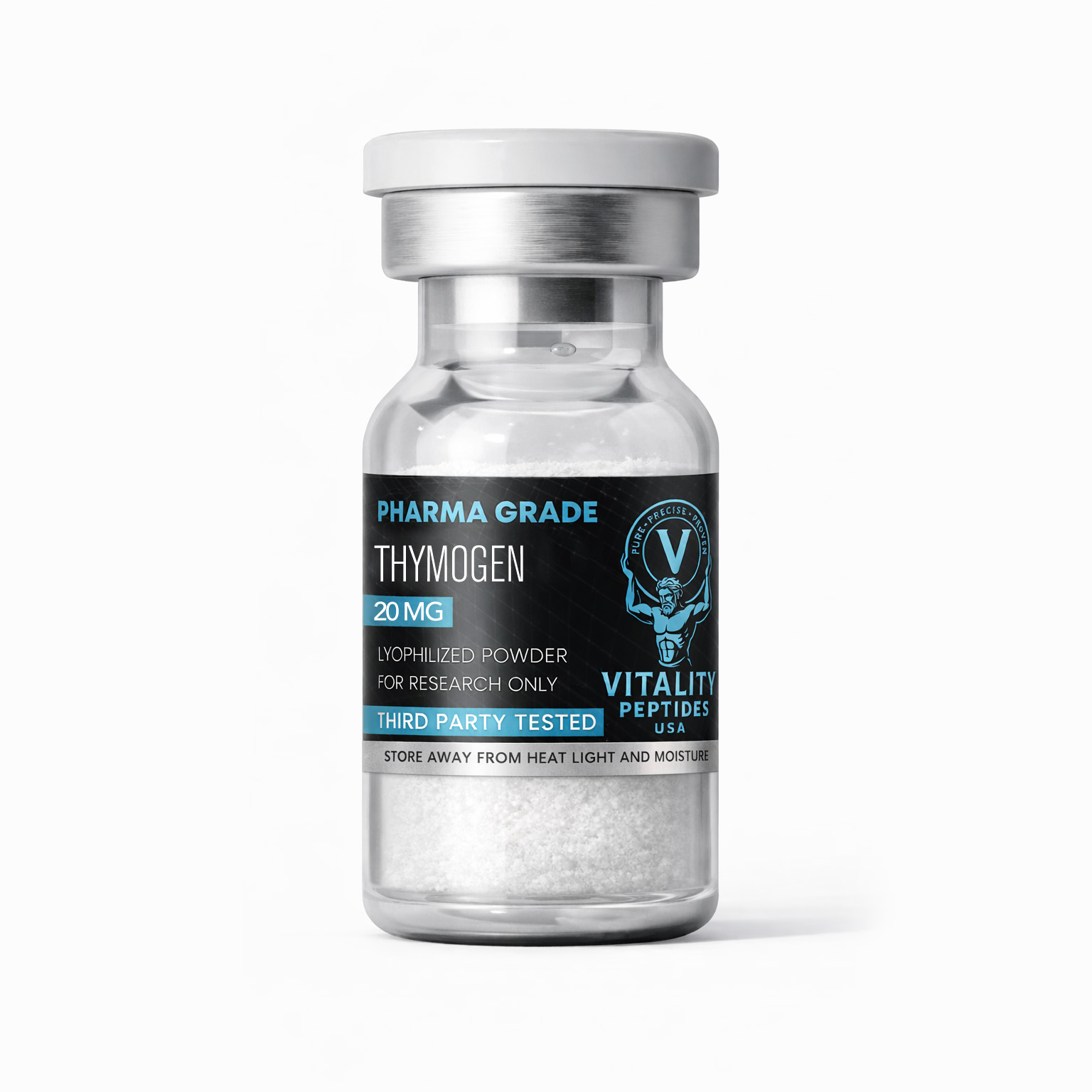
Thymogen Peptide

$80.00

Thymogen is a short bioregulatory peptide widely studied for its selective activity within thymic and lymphoid cellular pathways. In laboratory settings, it is commonly utilized to investigate immune signaling modulation, gene-expression dynamics, and cellular differentiation processes. As part of the Khavinson peptide family, Thymogen provides researchers with a focused tool for examining immune balance, chromatin regulation, and systemic stress-response mechanisms in controlled in-vitro models.

For research use only. Not for human or animal consumption.

SKU: VP-THYM Category:

Frequently Bought Together

Thymogen Peptide - 20 mg+Bacteriostatic Water - 30mL
Price for all:   $115.00

Description

Thymogen is a synthetic Khavinson bioregulatory peptide widely studied in laboratory research for its involvement in thymic cellular pathways, immune-related signaling, and gene regulatory mechanisms. As a member of the Khavinson peptide family, Thymogen has become an important research tool for scientists investigating peptide-mediated cellular communication, lymphoid tissue biology, and molecular processes associated with immune system regulation.

Researchers utilize Thymogen in controlled laboratory settings to examine mechanisms involved in cellular differentiation, chromatin regulation, and tissue-specific signaling within thymic and lymphoid models. Its targeted peptide structure makes it particularly valuable for experimental studies exploring immune-associated cellular function, systemic stress-response pathways, and age-related molecular regulation.

Manufactured to stringent research-quality standards, Thymogen is intended exclusively for scientific investigation, analytical testing, and in vitro laboratory research conducted by qualified professionals.

For laboratory research use only. Not intended for human or veterinary consumption.

What Is Thymogen?

Thymogen is a synthetic peptide belonging to the family of Khavinson bioregulatory peptides, a class of short amino acid sequences investigated for their ability to participate in cellular communication and tissue-specific molecular regulation. These peptides are widely studied for their interactions with gene expression, chromatin organization, and intracellular signaling pathways under controlled laboratory conditions.

Within scientific research, Thymogen has primarily been investigated using thymic and lymphoid cellular models to better understand peptide-mediated regulation of immune-associated biological processes. Researchers continue exploring its potential involvement in cellular differentiation, epigenetic regulation, and molecular mechanisms that contribute to maintaining cellular homeostasis.

As peptide biology continues to evolve, Thymogen remains a valuable experimental compound for laboratories investigating how short regulatory peptides influence immune-related cellular pathways and tissue-specific biological activity.

Areas of Laboratory Research

Thymogen is commonly incorporated into scientific investigations across multiple areas of molecular biology and peptide research, including:

  • Thymic cellular pathway research
  • Lymphoid tissue biology
  • Immune-related signaling studies
  • Gene expression and transcriptional regulation
  • Chromatin dynamics and epigenetic research
  • Cellular differentiation investigations
  • Peptide-mediated molecular signaling
  • Age-associated cellular biology
  • Peptide bioregulator research
  • In-vitro laboratory investigations

Its broad applicability makes Thymogen a valuable research peptide for universities, biotechnology companies, pharmaceutical laboratories, and professional research institutions.

Why Researchers Study Thymogen

Short peptide bioregulators have become an important focus of scientific investigation because of their role in cellular communication and molecular regulation. Thymogen provides researchers with a specialized peptide for exploring biological pathways associated with thymic function, lymphoid tissue biology, and peptide-mediated signaling mechanisms.

Its targeted biological profile makes Thymogen particularly useful for studies designed to improve scientific understanding of immune-related cellular processes and the molecular mechanisms that regulate tissue function. As research into peptide bioregulators continues to expand, Thymogen remains a valuable experimental tool for advancing knowledge in molecular biology, immunology, and peptide science.

Product Specifications

Specification Details
Product Name Thymogen Peptide
Peptide Type Synthetic Khavinson Bioregulatory Peptide
Appearance White to Off-White Lyophilized Powder
Purity ≥99% (HPLC)
Manufacturing Method Solid-Phase Peptide Synthesis (SPPS)
Form Lyophilized Research Peptide
Solubility Soluble in Appropriate Laboratory Research Solvents
Quality Testing Identity and Purity Verified by Analytical Testing
Intended Use Laboratory Research Only


Quality Standards

Every batch of Thymogen is manufactured using advanced peptide synthesis technologies and undergoes comprehensive quality-control procedures to ensure purity, consistency, and reliability for scientific research applications. Strict manufacturing standards help researchers obtain reproducible and dependable experimental results across a variety of laboratory investigations.

Key quality features include:

  • Research-grade synthetic peptide
  • ≥99% purity (HPLC)
  • Manufactured using Solid-Phase Peptide Synthesis (SPPS)
  • Batch-tested for identity and purity
  • High manufacturing consistency
  • Suitable for molecular biology, immunology, and analytical laboratory research

Researchers can rely on consistent product quality for peptide bioregulator studies, cellular signaling investigations, and immune-related laboratory research.

Storage Instructions

Proper storage is essential for preserving peptide stability and maintaining research quality throughout laboratory use.

For optimal handling:

  • Store refrigerated at 2–8°C upon receipt.
  • For long-term storage, keep frozen at -20°C or below.
  • Avoid repeated freeze-thaw cycles.
  • Keep the vial tightly sealed when not in use.
  • Protect from moisture, excessive heat, and direct light.
  • Handle using established laboratory protocols and appropriate personal protective equipment.

Following recommended storage procedures helps preserve peptide integrity and supports reliable laboratory performance

Why Researchers Choose Thymogen

Thymogen has become a trusted research peptide because of its relevance to immune-related cellular biology, thymic research, and peptide-mediated molecular regulation. Its association with Khavinson peptide research and its application in studies involving gene expression, chromatin organization, and cellular differentiation make it a valuable resource for laboratories investigating tissue-specific biological processes.

Researchers choose Thymogen because it offers:

  • Research-grade synthetic Khavinson bioregulatory peptide for laboratory investigations.
  • High purity (≥99% HPLC) to support reliable and reproducible scientific research.
  • Widely studied in thymic and immune-related cellular research.
  • Suitable for molecular biology, chromatin regulation, and peptide signaling studies.
  • Manufactured under rigorous quality-control standards for dependable laboratory performance.
  • Ideal for universities, biotechnology companies, pharmaceutical laboratories, and professional research institutions.

Its continued use in experimental peptide research supports scientific efforts to better understand peptide-driven cellular communication, tissue-specific molecular regulation, and immune-associated biological pathways.

Frequently Asked Questions

What is Thymogen used for in research?

Thymogen is commonly used in laboratory studies investigating thymic cellular pathways, immune-related signaling, gene-expression regulation, chromatin dynamics, cellular differentiation, and peptide-mediated molecular communication. It is intended exclusively for scientific and in vitro research.

What type of peptide is Thymogen?

Thymogen is a synthetic Khavinson bioregulatory peptide studied for its involvement in thymic biology, immune-associated cellular pathways, gene regulation, and tissue-specific molecular signaling.

What research areas commonly use Thymogen?

Researchers frequently use Thymogen in studies involving immunology, molecular biology, thymic research, lymphoid tissue biology, peptide bioregulator research, chromatin regulation, and age-associated cellular investigations.

How should Thymogen be stored?

Store Thymogen refrigerated at 2–8°C for short-term use or frozen at -20°C for long-term storage. Protect the peptide from moisture, direct light, excessive heat, and repeated freeze-thaw cycles.

Is Thymogen intended for human use?

No. Thymogen is supplied exclusively for laboratory research purposes and is not intended for human or veterinary consumption, therapeutic use, or diagnostic applications.

Research Use Disclaimer

This product is supplied exclusively for laboratory research, analytical testing, and scientific investigation. It is not intended for human consumption, veterinary use, therapeutic applications, or diagnostic procedures. By purchasing this product, researchers acknowledge responsibility for handling and using the product in accordance with applicable laboratory regulations, institutional policies, and laboratory safety guidelines.